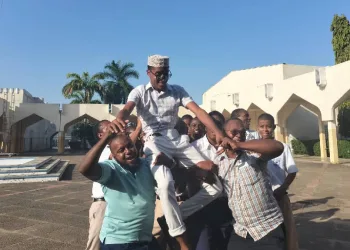

Harambee Stars players refused to train on Monday, September 22, 2026, four days before Kenya’s opening 2027 Africa Cup of Nations qualifier against Eritrea, after arriving at camp and jointly agreeing to withhold their participation until unpaid allowances and welfare complaints are addressed. The squad wants a direct meeting with President William Ruto or Ministry of Sports officials before they return to the training pitch at Nyayo National Stadium.
What triggered the boycott?
Players convened a meeting shortly after checking into camp on Monday and resolved, as a group, not to train. Two independent reports on the standoff, from Pulse Sports Kenya and South Africa’s Briefly News, describe the same core complaint: allowances owed since national-team duty stretching back roughly a year remain unpaid.


According to Pulse Sports Kenya, the outstanding dues trace back to friendlies against Equatorial Guinea and Senegal in November 2025, plus a two-match series against Lesotho played in South Africa in June 2026. Players say they have not been fully compensated for any of those assignments.
What exactly are the players demanding?
Beyond the money, the squad’s grievances center on how the federation manages travel and accommodation for national-team duty. The complaints, as reported, include:
- Unpaid allowances dating to at least three separate international assignments over the past year.
- Sub-standard hotels during both home and away fixtures.
- Long-layover flights on cheaper routes when more direct travel options were available.
- A face-to-face meeting with President Ruto or senior Ministry of Sports officials before players will resume training.
Football Kenya Federation did not respond to Pulse Sports Kenya’s request for comment on the grievances. Briefly News reported that national-team allowances are processed through the Ministry of Sports rather than the federation directly, which is part of why players are pushing for government-level engagement rather than waiting on FKF alone.
Quick facts: Kenya vs Eritrea
| Competition | 2027 Africa Cup of Nations qualifiers, Group D, Matchday 2 |
| Fixture | Kenya vs Eritrea |
| Date | Saturday, September 26, 2026 |
| Venue | Nyayo National Stadium, Nairobi |
| Kenya’s group | Group D, alongside South Africa, Guinea and Eritrea |
| Next fixture | Away to Guinea in Conakry, October 1, 2026 |
| Head coach | Benni McCarthy |
Is this the first allowance dispute in Kenyan football?
No. In July 2026, the Harambee Starlets, Kenya’s women’s national team, staged their own protest at the Football Kenya Federation’s Goal Project offices in Nairobi, refusing to board a scheduled flight to a pre-WAFCON training camp in France until outstanding payments were sorted out. That standoff was resolved before the team missed its camp, but it set a precedent players appear to be following now: withhold cooperation until money owed is paid, rather than raise the issue quietly through the federation.
254.ke covered the Starlets’ subsequent group-stage exit from WAFCON 2026 in August, a tournament they entered after that earlier dispute over unpaid dues.
What happens next?
As of Wednesday, September 23, neither Football Kenya Federation nor the Ministry of Sports had publicly confirmed a resolution or a meeting date with the squad. McCarthy’s technical bench has reportedly kept the disrupted camp productive by lining up an added friendly against Rwanda in Kigali on October 5, to make use of the extended international break between the Eritrea and Guinea qualifiers. Whether that friendly, or Saturday’s qualifier itself, goes ahead with a full-strength squad depends on how quickly the allowance dispute is settled.
The dispute also lands amid broader turbulence in Kenyan football governance this week, with FKF National Executive Committee members publicly listing administrative missteps and a cabinet secretary offering to mediate what he called a football crisis — context that suggests this is unlikely to be resolved with a single wire transfer. It also comes just days after Sports Cabinet Secretary Salim Mvurya’s ministry touted new stadium investment for the 2027 tournament Kenya is co-hosting; 254.ke reported in 2024 on government pledges of three major stadiums for CHAN and AFCON, a commitment players’ current complaints about basic travel and accommodation now sit awkwardly alongside.
Kenya’s participation in the qualifiers carries lower stakes than for most of its rivals: as one of three co-hosts of AFCON PAMOJA 2027 alongside Uganda and Tanzania, Kenya has already secured an automatic finals spot regardless of its results in Group D, according to the Confederation of African Football. That does not make Saturday’s match meaningless, but it does mean qualification pressure is not what is driving this dispute. Domestically, the national team’s troubles come as the FKF Premier League’s 2026/27 season kicked off on September 19, putting Kenyan football’s top flight and its national team in the headlines for different reasons in the same week.
Frequently asked questions
Why are Harambee Stars boycotting training?
Players say they are owed allowances from national-team assignments dating back to November 2025, and are also unhappy with hotel standards and flight arrangements provided for international duty. They want the unpaid dues settled and a meeting with President Ruto or Sports Ministry officials before resuming training.
Will the Eritrea match still happen on September 26?
As of this writing, the fixture has not been postponed or cancelled. Kenya are scheduled to host Eritrea at Nyayo National Stadium in their 2027 AFCON qualifying opener, though the boycott raises questions about team preparation heading into the game.
Has a Kenyan national team boycotted before over pay?
Yes. The Harambee Starlets, Kenya’s women’s team, staged a similar protest in July 2026 over unpaid allowances ahead of a WAFCON training camp in France.
Does Kenya still need to win these qualifiers to reach AFCON 2027?
No. Kenya is a co-host of the 2027 tournament, alongside Uganda and Tanzania, and has an automatic finals berth regardless of its group results, per CAF.
Who is responsible for paying the players — FKF or the government?
National-team allowances are processed through the Ministry of Sports rather than paid directly by Football Kenya Federation, which is why players are demanding engagement at the government level rather than from the federation alone.
By the 254.ke Newsroom